
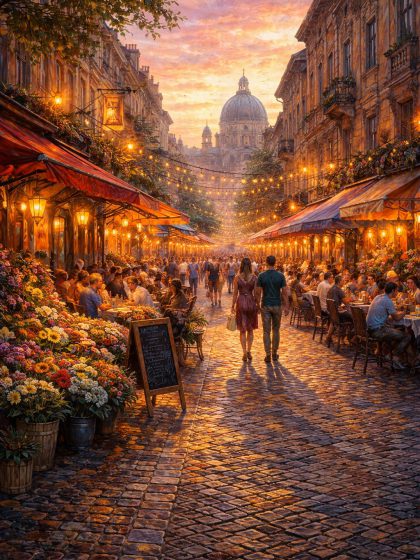
When Complexity Works
Some images are simple. Others are full of detail. But the best ones—no matter how complex—still feel like one complete whole.
🌄 First Impression
Some images are easy to understand right away.
Others feel rich, detailed—even a little overwhelming at first.
👉 But here’s the key question:
Does it feel like one image—or many separate pieces?
That feeling is called unity.
🧩 1. Unity (Why It Feels Like One Whole)
Even in a complex image, everything can still feel connected.
Unity happens when:
- Colors relate to each other
- Shapes feel consistent
- Nothing feels out of place
👉 The image feels like a complete thought, not a collection of parts
Why it works:
- Repeating colors tie different areas together
- Similar textures create consistency
- The overall style stays unified
Even with lots of detail, your brain says:
👉 “This all belongs together”
🔄 2. Complexity vs. Simplicity (When More Still Works)
Earlier, we learned:
👉 Simplicity creates clarity
But this image shows the opposite can also work:
👉 Complexity can create richness
The key difference:
- Bad complexity = clutter and confusion
- Good complexity = detail with structure
This image succeeds because:
- There’s a clear visual path
- No single area feels random
- Details support the whole instead of fighting it
🎯 3. Repetition (The Hidden Organizer)
With lots of detail, something has to hold it together.
That “something” is often repetition.
Look for repeating:
- Colors
- Shapes
- Textures
Why it works:
Repetition creates:
- Rhythm
- Familiarity
- Structure
👉 It helps your brain organize what it sees
⚖️ 4. Balance Inside Complexity
Even busy images still need balance.
In this case:
- Detail is spread across the image
- No single area feels too heavy
This keeps the image from feeling chaotic.
👉 It feels active—but not overwhelming
➡️ 5. Visual Flow (How You Navigate Detail)
In a complex image, movement becomes even more important.
Your eye needs help navigating:
- Where to start
- Where to go next
What helps:
- Lines
- Color changes
- Areas of contrast
These act like:
👉 “visual checkpoints” that guide your eye
⚠️ A Common Risk (When Complexity Fails)
If unity is missing, complexity becomes a problem.
👉 The image can feel:
- Messy
- Confusing
- Hard to follow
That’s the line artists must manage:
Detail vs. clarity
🧠 What You Can Learn From This
This example shows an important idea:
👉 Art doesn’t have to be simple to work
👉 It just has to be organized
- Unity holds everything together
- Repetition creates structure
- Balance prevents chaos
- Flow keeps your eye moving
✏️ Try This Yourself
Next time you see a detailed image, ask:
- Does it feel like one piece—or many?
- What repeats across the image?
- Do your eyes move easily—or get stuck?
🌱 Closing Thought
Simplicity is powerful.
But so is complexity—when it’s done well.
The difference is unity.
👉 When everything works together, even the busiest image can feel clear, complete, and satisfying.
Posted in art-basics by Geoff (42) Stevens