
Getting Started with Baby Chicks
For many new backyard chicken owners, bringing home baby chicks is one of the most exciting parts of starting a flock. Watching chicks grow from tiny, fluffy hatchlings into productive laying hens can be both rewarding and educational. However, the first several weeks require careful planning and daily attention to help young birds stay healthy and develop properly.
One of the first decisions is where to obtain your chicks. Many people purchase chicks from local farm supply stores during the spring season, while others order from hatcheries that ship day-old chicks directly through the mail. Local breeders and small farms can also be excellent sources, especially if you are looking for specific breeds or birds already adapted to your local climate.
Spring is generally the most popular time to start chicks because warmer weather makes brooding and transitioning outdoors much easier. In colder climates, raising chicks too early in the year may require additional heating and protection. In extremely hot regions, starting chicks before peak summer temperatures can help reduce stress on young birds.
Choosing the right breed is another important step. Some breeds are known for exceptional egg production, while others are favored for appearance, temperament, or cold-weather hardiness. Popular egg-laying breeds include Rhode Island Reds, Leghorns, Australorps, Plymouth Rocks, and Golden Comets. Buff Orpingtons are often recommended for beginners because of their calm personalities and friendly behavior. Many backyard owners choose a mixed flock to enjoy different feather colors, egg colors, and personalities.
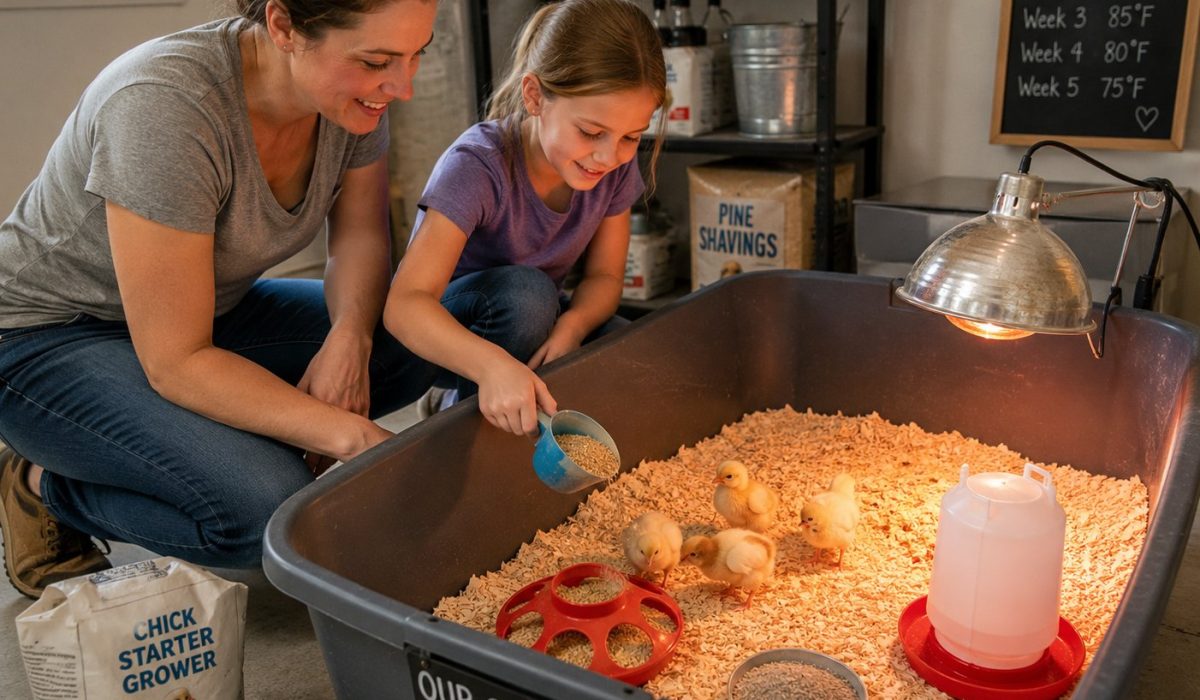
During the first several weeks, chicks must be kept indoors or in a protected brooder area where temperature can be carefully controlled. A large plastic tote, stock tank, or enclosed brooder box lined with pine shavings usually works well. Chicks should always have enough space to move around freely while staying safe from drafts, pets, and predators.
Heat is critical during early development. Newly hatched chicks typically require temperatures around 95 degrees Fahrenheit during their first week. The temperature can gradually be reduced by about five degrees each week until the birds are fully feathered. Many owners use traditional heat lamps, while others prefer safer radiant brooder plates designed specifically for chicks. Observing chick behavior often provides the best temperature guide — chicks huddled tightly together may be cold, while chicks avoiding the heat source may be too warm.
Proper nutrition also plays a major role in healthy chick development. Starter feed formulated specifically for chicks provides the protein and nutrients needed for rapid growth. Fresh water should always be available, and waterers should be shallow enough to prevent accidental drowning. Chick grit may also be offered, especially if chicks receive treats or forage outside the brooder, as grit helps them digest food properly.
As chicks grow, they quickly develop feathers, personalities, and flock behavior. Gentle handling during the first few weeks can help birds become calmer and more comfortable around people. With proper care, most young hens will begin laying eggs at approximately five to six months of age, rewarding owners with fresh eggs and the satisfaction of raising a healthy backyard flock.
Posted in raising-chickens by Erik Johansson