
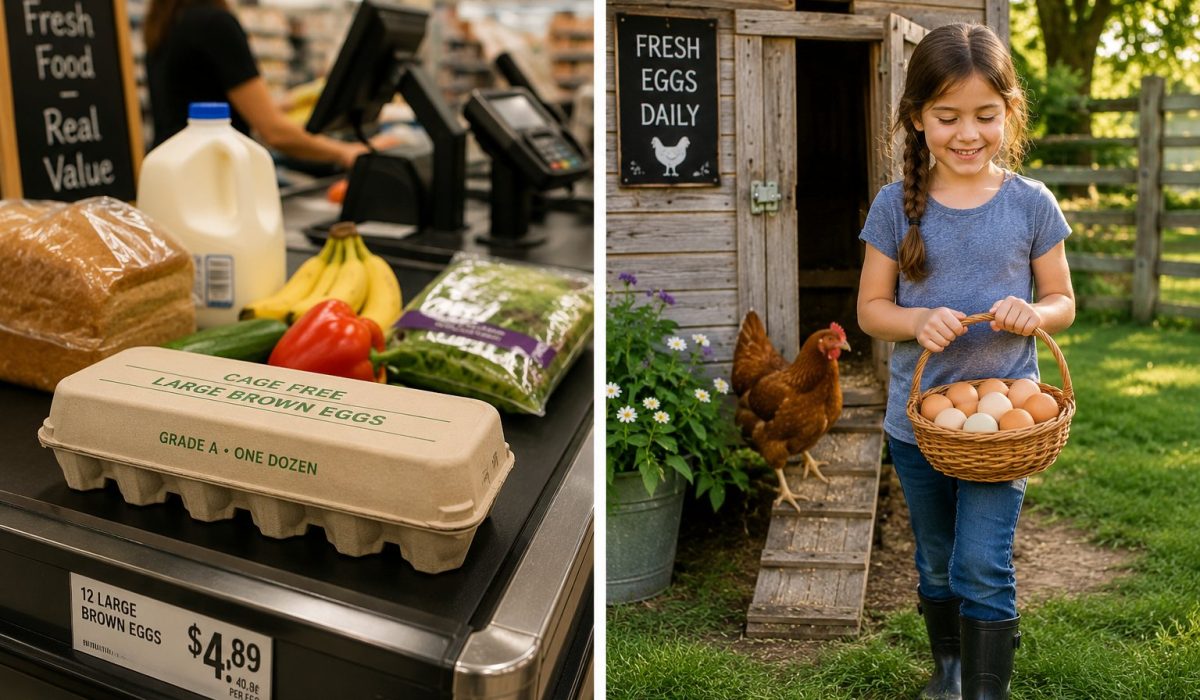
The Real Cost of Fresh Eggs
One of the most common questions asked by people considering backyard chickens is simple:
“Will raising chickens save me money on eggs?”
The answer is both yes and no.
Backyard chickens can provide a steady supply of fresh eggs, but most new owners are surprised to discover that eggs are only part of the story. Chickens require housing, feed, equipment, and daily care. For many owners, the rewards go far beyond economics, but it is still useful to understand the true costs before starting a flock.
The Start-Up Costs
The biggest expenses usually occur during the first year.
Typical start-up costs may include:
-
Chicks or young hens
-
Brooder equipment
-
Feeders and waterers
-
Heat lamps or brooder plates
-
Coop construction or purchase
-
Fencing and predator protection
-
Nest boxes and roosts
A simple homemade coop might cost only a few hundred dollars, while larger pre-built coops can cost well over a thousand dollars.
For many backyard owners, the coop becomes the single largest expense.
The Ongoing Costs
Once the flock is established, feed becomes the primary ongoing expense.
A typical laying hen consumes roughly one-quarter pound of feed per day. Six hens may consume more than 500 pounds of feed in a year.
Additional annual expenses can include:
-
Bedding materials
-
Oyster shell or calcium supplements
-
Grit
-
Occasional veterinary care
-
Replacement feeders or waterers
-
Coop maintenance
While none of these costs are overwhelming individually, they add up over time.
What Does a Dozen Eggs Really Cost?
Let's consider a small flock of six productive hens.
If each hen lays approximately 250 eggs per year, the flock produces:
6 hens × 250 eggs = 1,500 eggs
That's about:
125 dozen eggs annually
If annual expenses total approximately $400 to $500, the cost works out to roughly:
$3.20 to $4.00 per dozen
Depending on local egg prices, that may be similar to or slightly higher than grocery store eggs.
However, many owners point out that this comparison is not entirely fair.
Backyard Eggs Are Different
Most backyard eggs are collected within hours of being laid.
Many owners notice:
-
Richer yolk color
-
Firmer whites
-
Better flavor
-
Greater freshness
The difference becomes even more noticeable when hens are allowed to forage naturally for insects, grasses, and plants.
For people who value food quality, comparing backyard eggs to premium free-range or pasture-raised eggs is often more appropriate than comparing them to the least expensive eggs at the supermarket.
The Benefits You Can't Measure
Interestingly, many chicken owners stop worrying about the economics after a few months.
The chickens themselves become part of the reward.
Owners often enjoy:
-
Watching flock behavior
-
Spending time outdoors
-
Teaching children responsibility
-
Producing some of their own food
-
Sharing eggs with friends and neighbors
For many people, backyard chickens become as much a hobby as a source of eggs.
So, Do Chickens Save Money?
Sometimes.
If egg prices are high and start-up costs are spread over many years, a well-managed flock can eventually offset much of its cost.
But most backyard chicken owners will tell you that they did not keep chickens solely to save money.
They keep them because they enjoy fresh eggs, appreciate knowing where their food comes from, and simply enjoy having chickens in their lives.
And for many people, those benefits are worth far more than the cost of a dozen eggs.
Posted in eggs--profit by Erik Johansson