
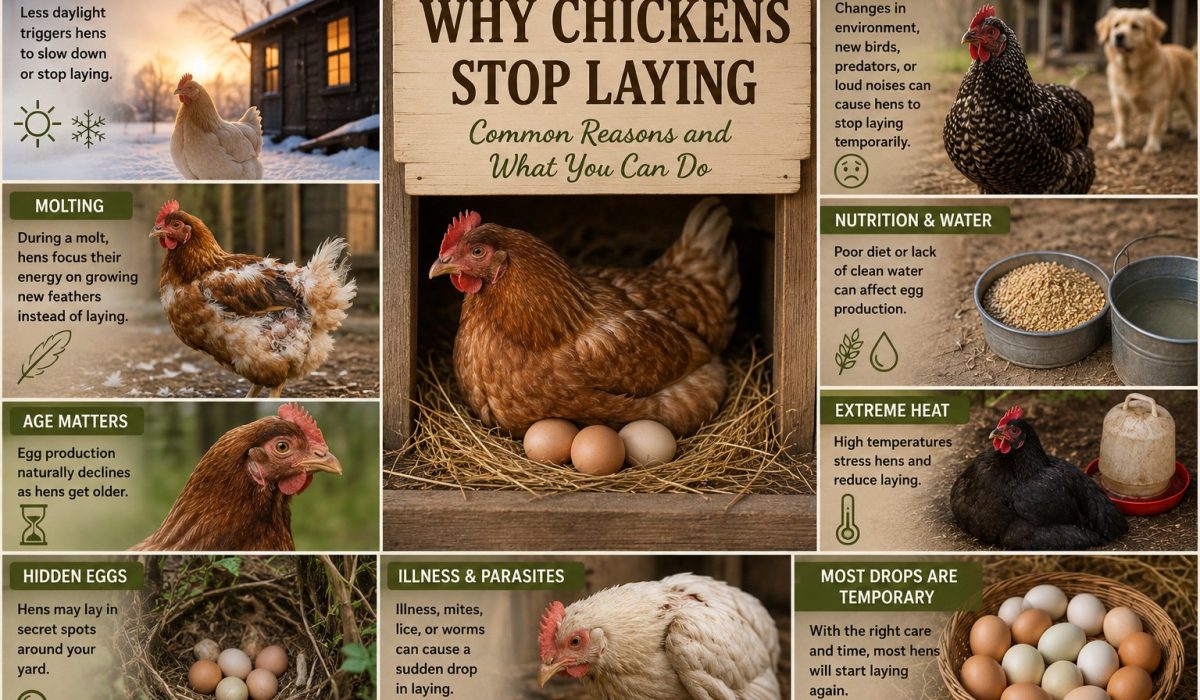
Why Chickens Stop Laying
Why Chickens Stop Laying
Few things concern backyard chicken owners more than opening the coop one morning and finding fewer eggs than expected. Fortunately, a sudden drop in egg production is often completely normal and can usually be explained by changes in the hens' environment, health, age, or natural biological cycles.
Understanding why chickens stop laying can help owners determine whether the problem is temporary or something that requires attention.
Shorter Days and Winter Weather
The most common reason hens stop laying is a reduction in daylight.
Egg production is closely tied to the amount of light a hen receives each day. During spring and summer, long daylight hours encourage hens to lay regularly. As autumn arrives and daylight decreases, many hens naturally reduce or stop egg production.
Some breeds continue laying through winter better than others, but nearly all flocks experience some decline during the shorter days of the year.
For many backyard owners, winter is simply a time to be patient and wait for spring.
Molting
Molting is another common cause of reduced egg production.
Each year, most hens shed old feathers and grow new ones. Producing feathers requires a tremendous amount of energy, and hens often divert resources away from egg production while replacing their plumage.
During a molt, hens may appear scruffy, ragged, or partially featherless. Egg production often slows dramatically or stops completely for several weeks.
Although it can look alarming, molting is a normal and healthy process.
Age Matters
Hens do not maintain peak production forever.
Most breeds lay their highest number of eggs during their first two years. After that, production gradually declines.
A three- or four-year-old hen may still lay eggs regularly, but usually not at the same rate she did as a pullet.
Many backyard owners happily keep older hens because of their personalities, even though they are producing fewer eggs.
Stress and Change
Chickens are creatures of habit.
Sudden changes can temporarily interrupt egg production, including:
-
Moving to a new coop
-
Introducing new birds
-
Predator encounters
-
Severe weather
-
Excessive noise
-
Changes in routine
Even a brief scare from a dog, raccoon, or hawk can cause a temporary drop in laying.
Fortunately, hens often return to normal production once the stress has passed.
Poor Nutrition
Egg production requires significant energy and nutrients.
If hens are not receiving adequate:
-
Protein
-
Calcium
-
Vitamins
-
Fresh water
their laying performance may suffer.
A quality layer feed combined with clean water and access to calcium sources such as oyster shell helps support consistent production.
Extreme Heat
Many people expect winter to affect egg production, but summer heat can be just as challenging.
During periods of extreme heat, hens often eat less and spend more energy trying to stay cool. As a result, egg production may decline.
Providing:
-
Shade
-
Fresh water
-
Good ventilation
can help reduce heat-related stress.
Hidden Eggs
Sometimes the hens haven't stopped laying at all.
Free-ranging chickens occasionally decide that a flower bed, brush pile, barn corner, or woodpile makes a better nesting location than the coop.
Many chicken owners have been surprised to discover a secret nest containing dozens of eggs hidden somewhere in the yard.
Before assuming production has stopped, it may be worth doing a little detective work.
Illness and Parasites
If egg production drops suddenly and is accompanied by:
-
Weight loss
-
Lethargy
-
Pale combs
-
Diarrhea
-
Respiratory symptoms
health issues may be involved.
Internal parasites, mites, lice, or illness can all affect laying performance.
In these situations, closer observation or consultation with a poultry expert or veterinarian may be appropriate.
Most Drops Are Temporary
The good news is that most decreases in egg production are caused by natural and temporary factors.
Seasonal changes, molting, age, and short-term stress account for the vast majority of laying interruptions.
Understanding these normal cycles helps backyard chicken owners worry less and enjoy their flock more.
After all, chickens don't read production schedules. Sometimes they simply decide it's time for a break—and usually, when conditions improve, the eggs begin appearing again.
Posted in eggs--profit by Erik Johansson