
The River-Chapter 4
The Pilot
Long before she became an attorney, before she discovered cycling, and before life carried her far from the farm where she grew up, the girl learned something important about persistence from her father.
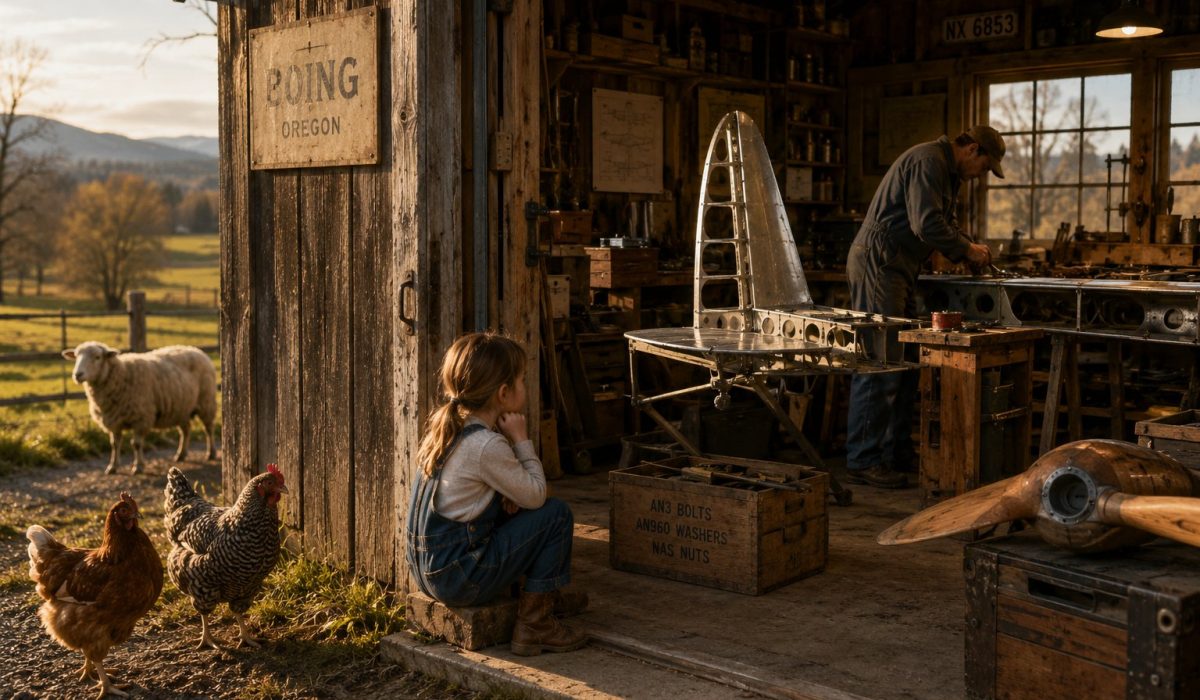
He was an engineer by profession and a farmer by circumstance. During the week he worked for Boeing in Oregon's Willamette Valley, surrounded by drawings, calculations, and the kinds of technical problems that fascinated him. Evenings and weekends were different. Those belonged to fences, tractors, livestock, and the endless collection of jobs that accompany life on a working farm.
To the girl, there never seemed to be any contradiction between the two worlds. Her father could discuss aerodynamics one day and repair a piece of farm equipment the next. He approached both with the same quiet confidence that things could be understood if one was willing to spend enough time studying them.
It was probably inevitable that he would eventually decide to build an airplane.
Not purchase one. Build one.
The project began in the corner of a shop and occupied a growing portion of the family's life for years. At first it hardly resembled an airplane at all. There were plans spread across workbenches, boxes of parts, stacks of aluminum sheets, and countless small pieces whose purpose was known only to the man assembling them.
Visitors occasionally asked how long the project would take. He usually smiled and gave an answer that revealed very little. The girl learned that large projects rarely came with precise completion dates. They advanced according to the time and attention available after more immediate responsibilities had been handled.
As the years passed, the collection of parts slowly began to resemble something recognizable. A section of wing appeared. Then another. The cockpit took shape. Instruments found their places. Wiring disappeared behind panels. What had once seemed impossible gradually became ordinary through repetition and steady effort.
Watching the airplane emerge taught the girl a lesson she would not fully appreciate until much later. Significant accomplishments seldom arrive in dramatic fashion. They are usually the result of hundreds of small decisions made consistently over long periods of time.
At the time, however, she simply enjoyed being nearby. She liked sitting in the shop while her father worked. Sometimes he explained what he was doing. Sometimes he didn't. The lessons were often conveyed without words. She observed the patience required to solve problems, the willingness to redo work that wasn't quite right, and the quiet satisfaction that came from making incremental progress toward a distant goal.
When the airplane finally stood completed, it seemed less like the arrival of something new than the natural conclusion of a process everyone had been watching for years.
The first flight was memorable, but not for the reasons many people might imagine. There was no grand speech, no celebration, and no dramatic declaration that a dream had been achieved. Her father approached the moment much as he had approached every stage of the project—with careful preparation, attention to detail, and confidence earned through thousands of hours of work.
The airplane flew.
Then it flew again.
And eventually it simply became part of life.
Decades later, her father still takes to the sky from time to time. The airplane remains a testament not only to engineering skill but to a particular way of viewing the world. Problems are solved one step at a time. Large goals are achieved through persistence. Difficult things become possible when broken into manageable pieces.
The girl carried those lessons with her long after she left the farm. They surfaced during demanding years of study, through professional challenges, and during the many unexpected turns that life presented. Whenever a task seemed too large or a destination too distant, she had an example close at hand.
After all, she had watched an airplane emerge from a pile of parts.
And once you have seen that happen, it becomes much easier to believe that other seemingly impossible things might be built as well.
Posted in the-river by Geoff Stevens