
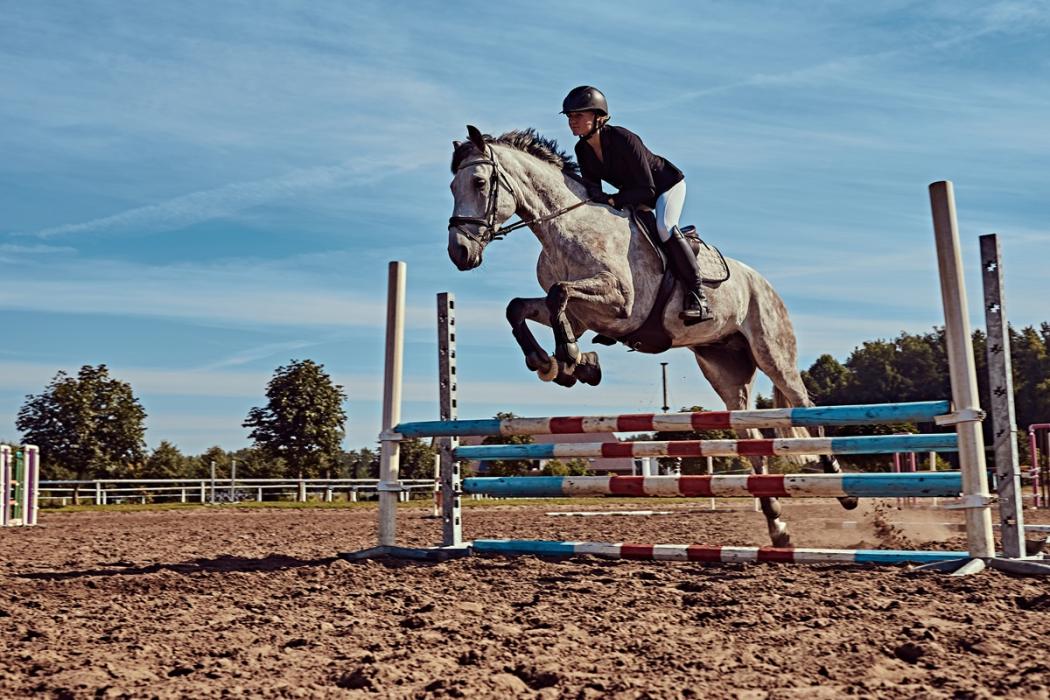
The Art of Jumping
Equestrian Jumping, often celebrated as a test of both horse and rider, demands a unique blend of athleticism, coordination, and control. While this discipline primarily revolves around mastering leaps and bounds, jumping brings an additional layer of thrill, complexity, and adaptability to the field. In this article, we will delve into the nuances of equestrian jumping competitions, exploring the vital skills, techniques, and its significance for riders and their equine companions.
1. The Essence of Jumping in Equestrian Competitions:
Within the realm of equestrian jumping competitions, the challenges presented assess the horse's agility, dexterity, and responsiveness, alongside the rider's capacity to maintain equilibrium and guidance. These challenges are meticulously crafted to spotlight the horse's eagerness to heed the rider's cues, maintain cadence, and execute precise jumps with an innate touch of grace.
2. Techniques for Equestrian Jumping:
a. Straight Trajectory and Poise: Prior to and throughout the leap, the rider must ensure the horse maintains a direct and poised trajectory. Such alignment empowers the horse to sustain its course, while poise guarantees an elegant and controlled takeoff and landing.
b. Propulsion and Involvement: The generation of propulsion via the horse's hindquarters stands as a pivotal facet of a forceful and controlled jump. The horse's active participation ensures the hindquarters play a central role in propelling them over the obstacle, ultimately culminating in a poised and efficient jump.
c. Adaptation and Precision: The rider's skill in regulating the horse's stride length, as well as modulating gaits to precisely approach and navigate jumps, holds immense importance. This adeptness at adaptation is instrumental in preserving cadence and equilibrium during the execution of meticulous and accurate jumps.
3. Varieties of Jumps in Equestrian Competitions:
In the context of equestrian jumping competitions, the obstacles are conventionally modest and uncomplicated, emphasizing the quality of execution over the stature or intricacy of the hurdle. Hurdles such as crossbars, verticals, or modest oxers are frequently encountered. The intention is not to test the horse's ability to surmount towering hurdles, but rather to exhibit their enthusiasm, technique, and suppleness while leaping.
4. Evaluation Criteria:
The evaluation of equestrian jumping competitions revolves around various facets, including the horse's technique, compliance, alignment, poise, rhythm, propulsion, as well as the rider's efficiency and aptitude in cultivating a harmonious partnership with the horse. The holistic portrayal of sophistication, command, and synergy between the horse and the rider holds paramount significance.
Equestrian jumping competitions stand as an indispensable fragment of the discipline, offering a platform to flaunt the horse's athleticism and the rider's mastery in upholding precision and unity. The amalgamation of meticulous execution, equilibrium, and elegance necessary during jumps augments the thrill in equestrian presentations. By honing the finesse of equestrian jumping, riders can sharpen their competitive edge, foster a more profound rapport with their horses, and amplify the magnificence and artistry of this extraordinary equestrian domain.
Posted in origins-and-development by Nicholas Ward