
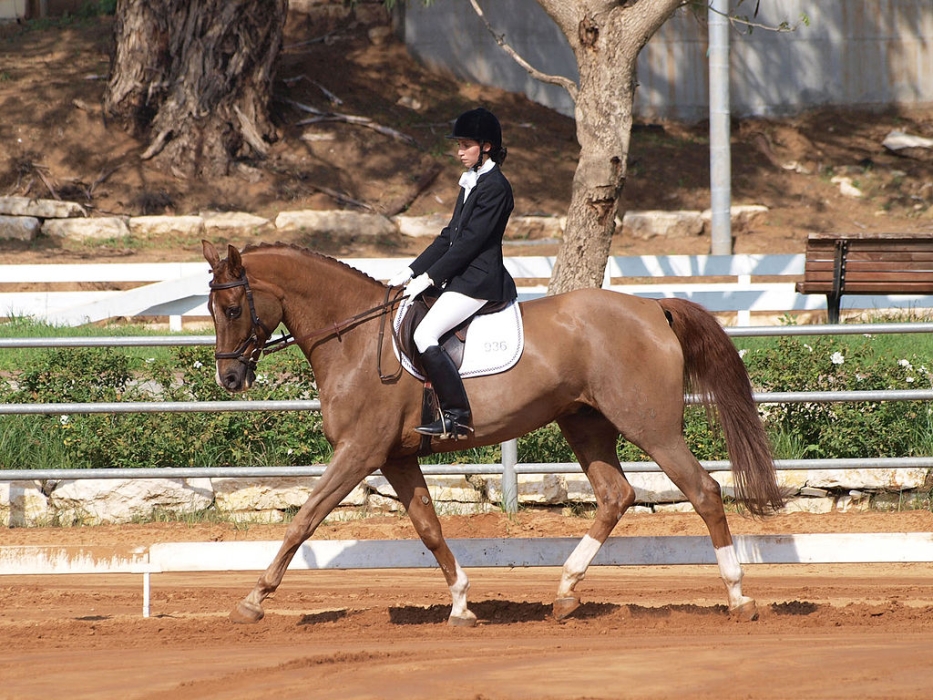
Competitions in Dressage
Dressage, known as the ultimate expression of horse training, is an equestrian discipline that showcases the harmony, precision, and grace between horse and rider. While jumping may be a prominent feature in some equestrian disciplines, dressage competitions focus on the artistry of movement and the technical execution of intricate maneuvers on the flat. In this article, we delve into the world of non-jumping competitions in dressage, highlighting the beauty, challenges, and significance these events hold for equestrians and their equine partners.
1. The Essence Dressage:
Dressage competitions place exclusive emphasis on the horse and rider's ability to perform a series of complex and precise movements on the flat. The purpose is to demonstrate the horse's obedience, suppleness, balance, and athleticism, as well as the rider's skill in communicating subtle cues and maintaining an effortless partnership.
2. Technical Elements of Dressage:
a. Dressage Tests: Competitors perform predetermined dressage tests that consist of a sequence of movements such as circles, diagonals, lateral work, flying changes, extended and collected gaits, and pirouettes. Each movement requires precise execution, maintaining rhythm, balance, and suppleness.
b. Geometry and Accuracy: Accurate riding is paramount in non-jumping dressage. Riders must follow specific patterns and shapes while maintaining correct bend, alignment, and balance. The ability to ride accurate lines and execute movements with precision contributes to the overall score and impression.
c. Collection and Extension: Dressage tests often include transitions between collected and extended gaits. Collecting the horse's movements emphasizes engagement, balance, and impulsion, while extending the gaits showcases the horse's natural athleticism and ability to cover ground elegantly.
3. Judging Criteria:
Dressage competitions are judged based on the horse's quality of movement, submission, obedience, balance, suppleness, and the rider's effectiveness in communicating with the horse. Judges evaluate the overall impression of harmony, precision, and elegance displayed during the performance.
4. Levels and Progression:
Dressage competitions typically follow a hierarchical structure with different levels of difficulty. Competitors begin at lower levels, mastering fundamental movements, and gradually progress to higher levels that demand greater precision, technicality, and refinement. This progressive structure allows horse and rider to develop their skills over time and advance in their dressage journey.
Dressage competitions epitomize the artistry and skill required in this elegant equestrian discipline. By focusing solely on the intricate movements performed on the flat, these events showcase the bond between horse and rider, the mastery of communication, and the dedication to achieving perfection in every stride. Dressage offers equestrians an opportunity to highlight their horse's grace, athleticism, and obedience while fostering a deeper connection and understanding with their equine partners.
Photo Title: Dressage Competition Horse Rider
Photographer: Revital Salomon
Source: https://commons.wikimedia.org/wiki/File:Dressage_Competition_Horse_Rider.JPG

License: https//creativecommons.org/licenses/by-sa/4.0
Attribution: Adapted from the original by cropping and adjusting colors
Posted in origins-and-development by Nicholas Ward