
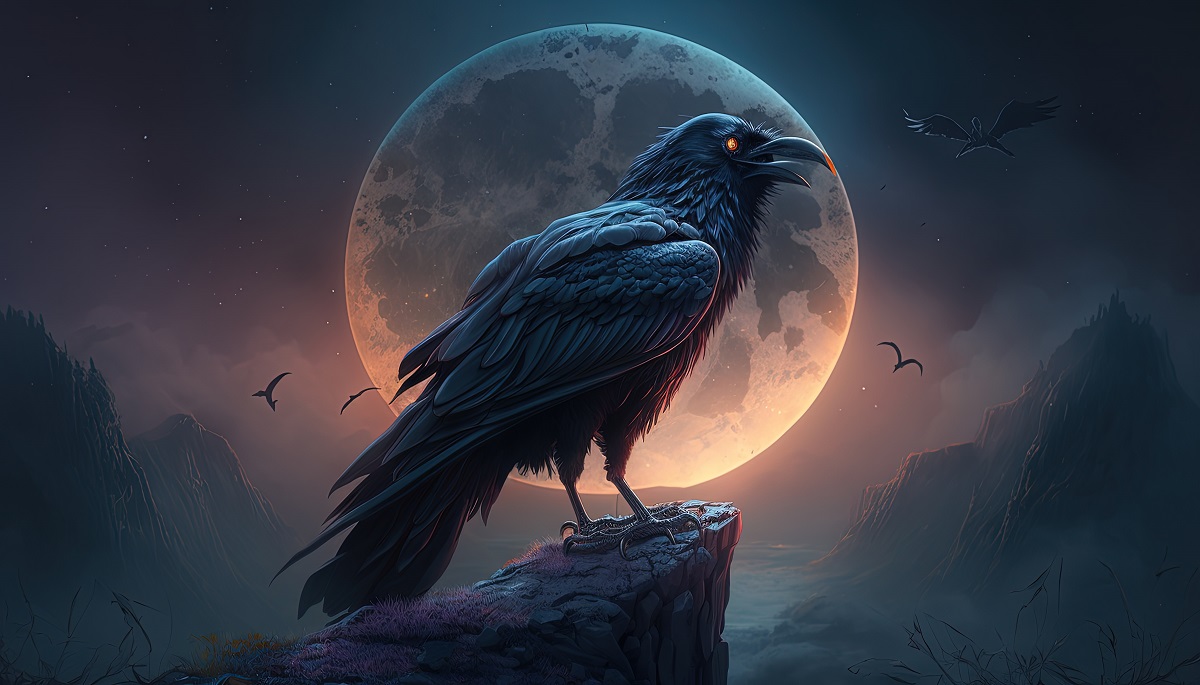
The Raven
Click on the link below
"The Raven," written by Edgar Allan Poe, is a haunting and melancholic narrative poem first published in 1845. It tells the story of an unnamed narrator who is mourning the loss of his beloved, Lenore. One bleak and desolate night, as he tries to distract himself from his sorrow, a mysterious raven appears at his window. The raven perches upon a bust of Pallas Athena, the ancient Greek goddess of wisdom.
Throughout the poem, the narrator engages in a conversation with the raven, who only utters the word "Nevermore" in response to the narrator's questions. The word "Nevermore" serves as a dark and ominous refrain, adding to the poem's gloomy atmosphere. As the conversation progresses, the narrator becomes increasingly agitated, asking the raven if there is any hope for him to be reunited with Lenore in the afterlife. The raven's persistent response with "Nevermore" leads the narrator deeper into despair and madness.
"The Raven" explores themes of grief, loss, and the human struggle to find meaning in the face of mortality. The raven, often interpreted as a symbol of death and mourning, serves as a constant reminder of the narrator's pain and the finality of death. The poem also delves into the human tendency to dwell on the past and the torment that can arise from a refusal to accept the reality of loss.
Poe's masterful use of language, rhythm, and rhyme contributes to the poem's eerie and haunting quality. The repetitive and rhythmic "Nevermore" enhances the sense of foreboding, while the vivid imagery and somber tone evoke a sense of melancholy that resonates deeply with readers.
Overall, "The Raven" is a timeless and iconic work of American literature that delves into the darkest recesses of the human psyche, exploring the depths of sorrow and the fragile nature of sanity.
Posted in the-wild by Geoff Stevens